
Uncategorized
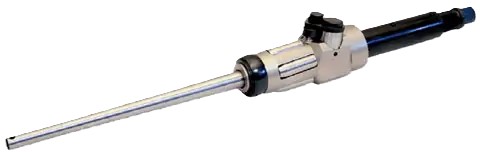
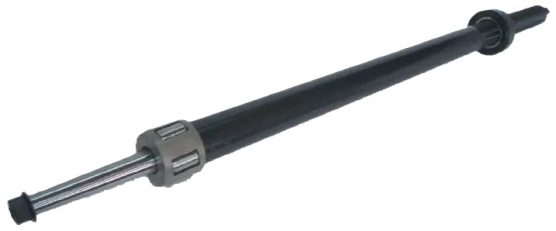

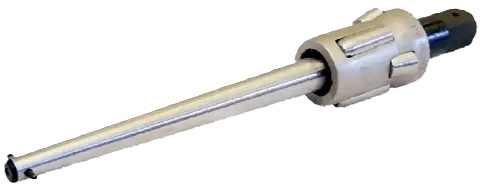
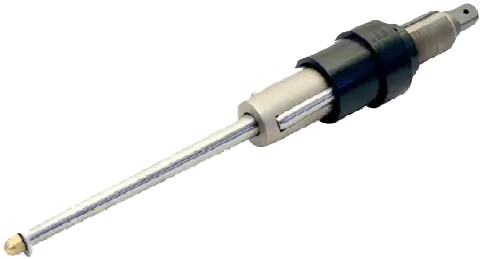
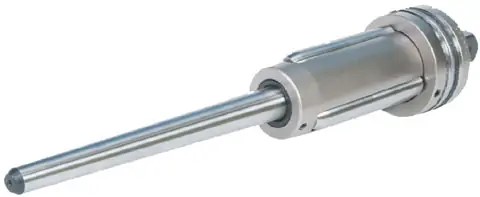

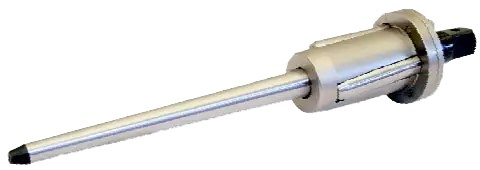
UV-Photo-X Fluorescence Analyser – MODEL 6650B
The ability to monitor the concentration of an analyte in a process stream is critical for accurate and reliable process control. There are many techniques used to determine the analyte concentration of interest. One of the most sensitive sensing techniques is molecular fluorescence. Fluorescence occurs when a molecule absorbs light energy, either ultraviolet or visible, and rapidly emits light, at some longer wavelength. Fluorescence of this type is referred to as Stokes fluorescence. Fluorimetry characterises the excitation and emission properties of the molecular species.
LXT-220
Model LXT-220 Dissolved Oxygen Controller is a robust and versatile instrument for the measurement and process control of dissolved oxygen in a liquid component. Customisable, the Model LXT-220 comes standard with a single 4-20mA current output but can have as many as five. The current output is field selectable and may be expanded to any range within the transmitter’s full operating range. It can also be programmed as reverse acting; for example, a 4-20 mA output for a range of 0 to 10 ppm can be reversed to 10 to 0 ppm.
- Front panel membrane switches
- Menu driven backlit display with contrast adjustment
- Automatic calibration: this allows calibration points to be defined upon initialisation of the transmitter
- An easy back to factory calibration menu allows the instrument to return to a predetermined factory calibration. The default parameters are: zero electrode offset and –157.5mV/FS slope.
- 4-20mA current output fully expandable to any range within the transmitter’s full operating range. The output is field selectable and fully programmable. The current output can be configured to be reverse acting
- Temperature conversion: temperature can be displayed in either Fahrenheit or Celsius. The units can be toggled from one to the other in the field with the conversion calculation performed automatically
Total Organic Carbon Analysers – Series 6700
The Series 6700 covers a complete range of Total Organic Carbon (TOC) Analysers capable of addressing a variety of industrial applications for process and environmental compliance purposes. Depending on the application, TAI can recommend which technique is best suited to continuously detect TOC within your process.
- Complies with EPA, ASTM and other standard approved methods for continuous TOC analysis
- NPOC (Non-purgeable organic carbon) analysis
- TOC-True Analysis (including volatile organics)
- Rapid response
- On-board Microsoft Windows CE computer plus paperless chart recorder or Menu driven LCD display
- Separate electronics and liquid compartments
- Low maintenance and easy access for service
Dissolved Oxygen Transmitter – LXT-280
Model LXT-280 Transmitter is a robust and versatile instrument for measurement and process control of dissolved oxygen. This instrument is Factory Mutual Approved as intrinsically safe and explosion proof for use in Class I, II and III Divisions 1 Groups A through G hazardous areas. The Model LXT-280 transmitters provide solutions to a variety of liquid analytic applications involving hazardous areas.
- Magnetic switches located behind a glass window can be activated without having to open the instrument
- Menu driven backlit display with contrast adjustment
- Automatic calibration: this allows calibration points to be defined upon initialisation of the transmitter
- An easy back to factory calibration menu allows the instrument to return to a predetermined factory calibration. The default parameters are: zero electrode offset at 0 ppm or 0% oxygen and -400 mV at full scale
- 4-20mA current output transmitted on the same 24 VDC power wiring. The current output is fully expandable to any range within the transmitter’s full operating range. The current output can be configured to be reverse acting
- Temperature conversion: temperature can be displayed in either Fahrenheit or Celsius. The units can be toggled from one to the other in the field with the conversion calculation performed automatically
Sentinel Analysers
Teledyne offers two proven standard sensor configurations as functioning receptacles for its Oxidation Reduction Potential (ORP) cartridge. The SP-1 immersion or the SP-2 valve retractable sensors come in a variety of materials to further enhance the resistance of aggressive corrosion aqueous media and can be ordered in varying lengths to meet installation requirements.
- Teledyne’s ORP electrode and sensor have a low physical profile (3/4” dia) that allows for greater ease of insertion into potentially high flow rate/pressure pipelines
- Selectable sensor housing lengths allow for reaching deep aeration basins or vats
- The ORP electrode (cartridge) is replaceable (as a component of the sensor) at a much lower life cycle cost than that of the competition
- The sensor has a preamp (signal conditioner) integral to the sensor that provides a cleaner signal for transmission over longer cable lengths
- Attempting to measure ORP with a pH electrode will yield an unacceptable offset in mV. An oxidising agent such as quinhydrone (cyclohexadiene) must be added to the buffer to develop a measurement standard
- Being acidic, the quinhydrone must be used at 7pH or less (4pH). This will approximate a correct mV reading of 59.1 per decade
Alkalinity Analyser – Model 6800
Model 6800 Alkalinity Analyser utilises a direct measurement of Alkalinity measurement. Unlike titration method, the 6800 measures the CO2 concentrations derived from analysis of Total Inorganic Carbon (TIC), using interference-free infrared technology. Both methods are compatible, since each uses the same stoichiometric relationships. For convenience in relating the technologies, phenolphthalein alkalinity id determined.
- Alkalinity/Direct Detection Method
- Avoids Titrimetric/Colorimetric Procedures
- Reports total alkalinity
- Requires no probes
- Integrates with Teledyne TOC Platform
- Interference free analysis
- Completely automatic
- Rapid response
Free Chlorine Analyser – Model FCA-22
The FCA22 is a panel mounted, ready to use, Free Chlorine Analyser. It is designed to monitor free chlorine in drinking water, rinse water, cooling water or other fresh water samples from 0.05 – 20 ppm Cl2. The FCA22 features a plug and play design that incorporates a flow control device, a pH sensor, a chlorine sensor and the analyser/controller conveniently mounted on a PVC panel. Connect the sample and drain lines, connect the power and outputs and it is ready to use. Calibration is accomplished by DPD comparison.
- Panel mounted system
- Plumb and play design
- Automatic pH compensation
- Automatic flow control
- C22 analyser capability
Optical DO Analyser – Model LXT-220-D08
The LXT-220-D08 optical dissolved oxygen sensor uses a fluorescence quenching method to determine the oxygen concentration in water. The use of this Optical Dissolved Oxygen method by the LXT-220-D08 minimises maintenance, increases reliability and improves the long term accuracy of the measurement. Combine this improved measurement technology with the rugged, easy to install design and the LXT-220-D08 provides the best solution for long term measurements in aeration basins, aquaculture and all types of environmental water.
- Optical technology
- Minimum maintenance
- Long maintenance intervals
- Stable measurement
- Maximum measurement accuracy
- No flow needed
- Measurement possible in still water
- Intelligent sensor
- Self-monitoring
- Storage of calibration data in sensor
- Digital data transmission
- Insensitive to electromagnetic interferences
- Dual Channel Capability
- Lower Cost – 2 DO8 sensors per analyser